Snare drum buyer guide
Best snare drums: choose what deserves an audition
Start with the job: a lower-cost steel workhorse, a deep aluminum reference, a thick maple contrast, or a shallower aluminum drum with two included wire choices.
We checked exact maker specifications, independent or technically attributed listening evidence, and current US and German store pages on . We did not play or record these drums. The final choice still depends on heads, tuning, wires, sticks, room and player.
- Lower-cost steel: Ludwig Supralite LU6514SL.
- Deep aluminum reference: Ludwig Supraphonic LM402.
- Thick maple contrast: TAMA S.L.P. G-Maple LGM146-KMB.
- Shallower aluminum: Yamaha Recording Custom RAS-1455.
Avoid buying blind: no shell material, depth or review count predicts how a drum will sit in your room.
Verify before paying: exact model code, included heads and wires, stand and case clearance, delivery date, and the chosen seller's written return conditions.
Use the three-tuning audition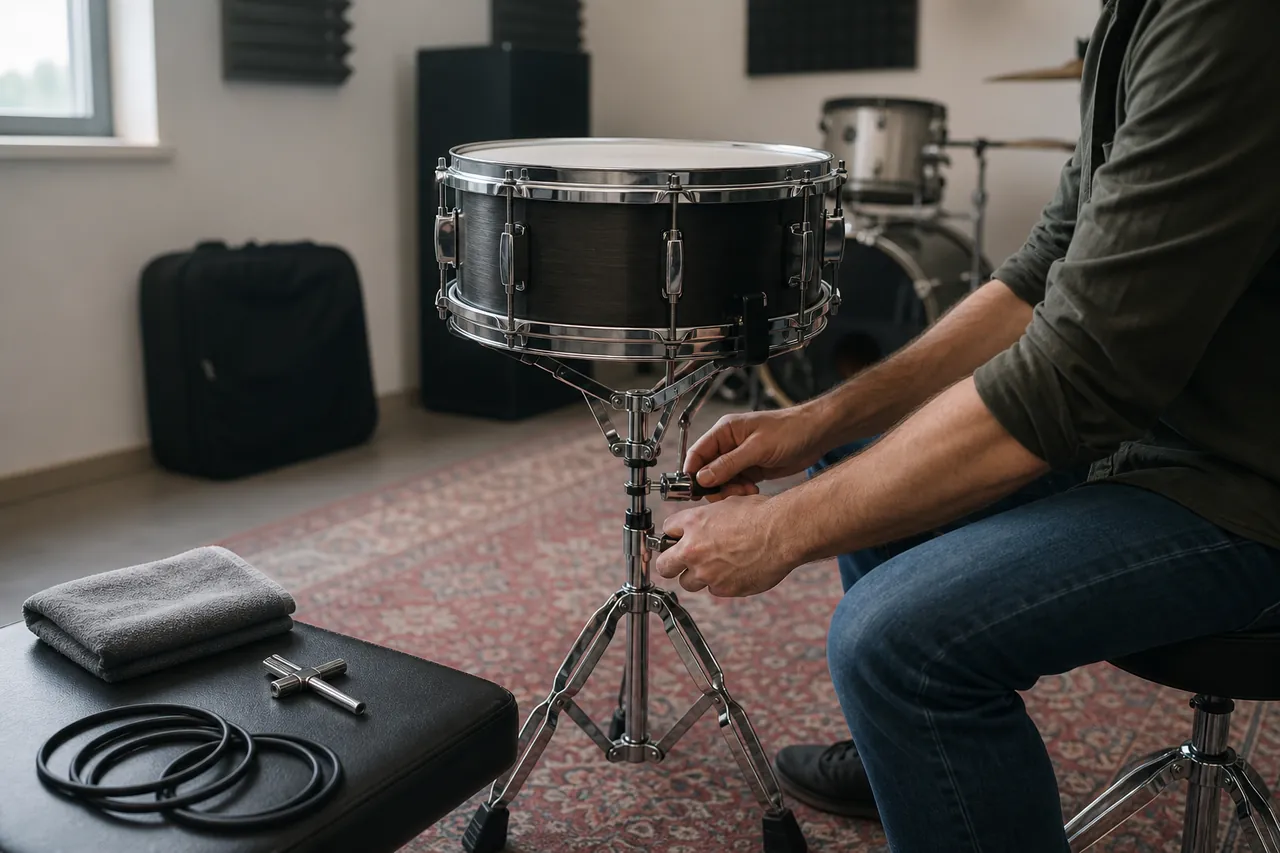
Terms a buyer should be able to explain
These are inspection clues, not tone guarantees.
Diameter and depth
Diameter is the head size; depth is the shell height.
All four use 14-inch heads, while depth ranges from 5.5 to 6.5 inches.
Confirm stand, case and kit clearance, then compare at matched tunings.
Deeper does not automatically mean louder, lower or better.
Shell material
The cylinder is steel, aluminum, maple or another material.
Material works with thickness, edges, heads, hoops and wires.
Use it to create a contrasting audition, not to buy unheard.
“Wood is warm” and “metal is bright” are broad prompts, not measured results.
Plies and shell thickness
Wood shells stack layers called plies; makers often state metal thickness in millimetres.
TAMA counts 12 maple plies plus one outer mappa-burl ply: 13 total. Its current page says 11 mm, while an older regional list said 12 mm.
Use the thick construction as the reason to audition it against metal.
More plies or millimetres is not a quality score.
Hoops
The rings hold and tension the heads; these choices use triple-flanged or die-cast designs.
Hoops change rim feel and the hardware package.
Check rimshot and cross-stick response at your actual volume.
Heavier or die-cast hoops are not universally superior.
Throw-off
The lever engages and releases the wires under the bottom head.
Its position and action can collide with a stand basket, tom or leg.
Operate it repeatedly with the drum mounted at playing height.
A famous shell does not excuse awkward hardware.
Snare wires
The strands under the resonant head create the snare response.
Wire count, tension and condition can dominate soft-note response.
Compare the Yamaha's included 20- and 10-strand sets only after fixing the tuning.
More strands do not automatically mean more useful sensitivity.
Overtone and dampening
Overtones continue around the main hit; dampening shortens or reshapes them.
The room and microphone can make the same ring useful or distracting.
Listen open first, then add one small reversible dampener.
A ringing shop drum is not proof that its shell is unsuitable.
How the four snares earned an audition
We began with current major-store ranges, then challenged each lane with at least four alternatives. A finalist needed an exact US order page, an exact continental-European order page, a separate observable popularity signal and a physical reason to enter the audition. Popularity finds relevant candidates; it does not prove sound quality. Pearl STH1450S left the guide because its exact cross-market orderability and demand trail were weaker than the Yamaha RAS-1455.
Listening evidence was treated carefully. The Supralite source includes the exact 14 × 6.5 size. The Yamaha source names RAS1455. The available Ludwig test is the tube-lug LM402T, and the TAMA test is an exact-size related G-Maple version, so neither is presented as direct proof for the delivered finalist. Those sources shape the shop questions; the matched audition decides.
Evidence limit: the independent sources did not publish physical sample counts. Their heads, tunings, rooms, microphones and delivered drums may differ from yours. Audio recorded by a maker or publisher is useful for hearing a procedure, not for ranking unlike recording chains.
Choose the experiment you need
The prices below were observed on July 20, 2026 and are not promises.
| Exact model | Physical starting point | Observed US / Germany | Who should audition it |
|---|---|---|---|
| Ludwig Supralite LU6514SL | 14 × 6.5 in; steel; 2.3 mm triple-flanged hoops | $209 in stock / €298, 5–7 weeks | The buyer protecting budget while keeping a full-size metal drum in the comparison. |
| Ludwig Supraphonic LM402 | 14 × 6.5 in; seamless aluminum; Imperial lugs | $699 in stock / €949, 8–10 weeks | The buyer willing to pay for the exact long-running construction only after a direct A/B. |
| TAMA S.L.P. G-Maple LGM146-KMB | 14 × 6 in; 12 maple plies plus outer mappa burl; steel hoops | $449.99 in stock / €455 in stock | The buyer who needs a thick wood-shell contrast rather than another metal variation. |
| Yamaha Recording Custom RAS-1455 | 14 × 5.5 in; 1.2 mm aluminum; 3 mm die-cast aluminum hoops; two wire sets | $579.99 in stock / €589 in stock | The buyer comparing shallower depth and wire response in a compact aluminum package. |
The recommendations, with reasons to walk away
Ludwig Supralite LU6514SL: protect the budget
For: a player replacing a basic kit snare without paying flagship money.
The exact 14 × 6.5 steel model was orderable at both anchors, and its 20 Sweetwater reviews plus 88 Thomann ratings show unusual current attention at this price.
Advantage: at the observed US price, the saving versus every other finalist can fund a case, fresh head and careful setup.
Drawback: Thomann quoted 5–7 weeks, and Bonedo's multi-size test found the 14 × 6.5 less even than two neighboring sizes in its setup. Treat that as a reason to listen carefully, not a verdict on every unit.
Avoid if: you cannot audition the exact size or need immediate European delivery.
Alternative: Yamaha RAS-1455 for an in-stock shallower aluminum comparison with two supplied wire sets.
Exact current identity, store paths and construction are strong. Net weight, current manufacturing origin and direct maker warranty terms were not verified.
Found a changed specification or source? Report a correction.
Ludwig Supraphonic LM402: pay for the reference only after the A/B
For: a player who specifically wants the 14 × 6.5 seamless-aluminum, Imperial-lug model and can compare it directly with cheaper drums.
Ludwig documents the exact LM402 construction; Sweetwater showed it in stock with 40 reviews, while Thomann showed 56 ratings and a top-three aluminum-snare sales rank.
Advantage: exact model identity and a deep current dealer trail make it easier to discuss like-for-like parts and comparisons.
Drawback: the observed price was more than three Supralites in the US, and Thomann quoted 8–10 weeks. The independent test we found is the tube-lug LM402T, not this Imperial-lug model.
Avoid if: reputation is doing more work than a matched audition, or the delivery delay misses your session.
Alternative: Supralite when budget is binding; Yamaha RAS-1455 when shallower aluminum is the more useful variable.
Construction, identity, US stock and German orderability are clear. Sound is deliberately not transferred from LM402T.
TAMA LGM146-KMB: make wood versus metal a real test
For: a drummer whose open question is thick maple construction rather than depth alone.
The exact KMB finish and model code were in stock at both anchors. Sweetwater showed seven reviews; Thomann showed 12 ratings, a current category rank and 41% exact-product cross-shopping.
Advantage: 12 maple plies plus one mappa-burl outer ply create a materially different finalist from three metal shells.
Drawback: current sources reconcile to 13 total plies and 11 mm, while an older regional distributor list said 12 mm. Related-version listening evidence cannot promise the exact KMB drum's sound.
Avoid if: you need a shallow shell, the lowest price, or a sound conclusion without auditioning.
Alternative: Supralite for lower-cost steel; Yamaha for a 5.5-inch aluminum control.
Exact regional identity and current orderability are strong. Net weight, manufacturing origin and maker warranty terms remain unverified.
Yamaha RAS-1455: compare depth and wire response
For: a player who wants a 5.5-inch aluminum shell and a controlled way to compare two supplied wire configurations.
Yamaha identifies the exact RAS-1455, its 1.2 mm shell, die-cast aluminum hoops, 20-strand installed wire and bundled 10-strand wire. Both anchors showed it in stock.
Advantage: the second wire set creates a useful one-variable experiment after tuning is fixed; Thomann also showed 19 ratings and a top-ten aluminum-snare rank.
Drawback: it costs far more than the Supralite, and changing wires introduces setup work. The published listening profile still reflects one undocumented sample count and recording chain.
Avoid if: you will never use the second wire set or need a deep 6–6.5-inch shell.
Alternative: LM402 for the deeper aluminum reference, but only after comparing the price and wait.
Exact model, current stock, construction and included wires are well documented. Net weight and exact manufacturing origin were not verified.
The matched-head, three-tuning audition
Use the same sticks, stand height, room position and short passage. If the shop permits it, compare the same head model in similar condition; otherwise record that mismatch before judging the shell.
- Medium baseline: seat both heads, set even tension and leave the drum open. Play center hits, ghost notes, rimshots and cross-sticks.
- Higher tension: raise in small even turns. Note when response becomes useful and when the drum feels choked.
- Lower tension: return through baseline and lower evenly. Note wire buzz, pitch spread and soft-note response.
- One change only: alter wire tension or add one small dampener, never both. For the Yamaha, swap wires only after saving the original setting.
What a snare spec sheet cannot tell you
Room and microphone
A reflective room can exaggerate sustained pitches, while close microphones expose head and wire choices. Compare in the room that matters or preserve a valid return option.
Heads and setup
Factory heads are a starting condition, not the permanent identity of a shell. Record what is fitted before comparing a fresh tuned head with a worn or uneven one.
Rehearse the hardware envelope before paying
Mount the candidate at normal seat height. Rotate the throw-off toward every plausible position, engage it with the basket tightened, and check the first tom, thigh, kick-pedal leg and case lid. Fold the stand and confirm that drum plus stand fit the transport plan. A good shell is still the wrong purchase if the lever is awkward in the actual kit.
A fair two-drum A/B
Mark one rug position, use the same passage and alternate A-B-B-A. Ask a second listener to write only “attack, decay, soft-note response, rimshot, cross-stick.” Reveal brand and price after the notes. Phone audio is a memory aid only; clips from different rooms are not a comparison.
Audition without misunderstanding the return window
Sweetwater, United States
The policy says new products can usually be returned within about 30 days from shipping for refund, store credit or exchange. Get an RA first; return the drum in received condition with accessories, documents, UPC and original packaging. Promotional outbound shipping can be deducted. Confirm that your planned head, wire and stick test preserves the remedy before playing.
Thomann, continental Europe
The German 30-day framework requires the product, accessories and original packaging without avoidable signs of use. A shop-equivalent inspection is safer than a rehearsal or gig. Return-cost handling varies by country; Thomann's German page says Germany is covered, while localized terms control elsewhere. Ask in writing before changing a head or wire set.
Product details and support checks
Retailer coverage below is not a maker warranty and applies only to an eligible purchase from that seller.
| Model | Size / weight | Construction | Manufacturing origin | Brand | Warranty / support |
|---|---|---|---|---|---|
| Ludwig Supralite LU6514SL | 14 × 6.5 in; net weight not published in checked sources. | Steel shell; 2.3 mm triple-flanged hoops; tube lugs; P88i throw-off on current German listing. | Not verified for the current exact model; inspect its label. | Ludwig, established 1909; Monroe, North Carolina. | Sweetwater's separate two-year US purchaser coverage is non-transferable; normal wear, abuse, consumables such as drumheads and other exclusions apply. Thomann's separate three-year consumer guarantee is non-assignable and excludes wear, misuse, poor care and non-original parts. |
| Ludwig Supraphonic LM402 | 14 × 6.5 in; net weight not published in checked sources. | Seamless aluminum shell; steel triple-flanged hoops; ten Imperial lugs; P88AC throw-off. | Ludwig describes the Supraphonic line as USA-made. | Ludwig, established 1909; Monroe, North Carolina. | Same seller-specific coverage limits as above. Sweetwater or Thomann handles its own coverage; neither term is presented as Ludwig's global maker warranty. |
| TAMA S.L.P. G-Maple LGM146-KMB | 14 × 6 in; net weight not published in checked sources. | 12 maple plies plus one outer mappa-burl ply, 13 total; current TAMA and Thomann pages say 11 mm; 2.3 mm steel hoops. | Not verified for this exact current model; inspect its label. | TAMA, Hoshino Gakki's drum brand since 1974; based in Japan. | Same seller-specific Sweetwater and Thomann conditions. No current exact-model TAMA maker term was located, so retain the receipt and ask the chosen seller to identify the service route. |
| Yamaha Recording Custom RAS-1455 | 14 × 5.5 in; net weight not published in checked primary sources. | 1.2 mm aluminum; outward center bead; 3 mm die-cast aluminum hoops; 20-strand fitted and 10-strand bundled wires. | Not verified for the current exact model; inspect its label. | Yamaha, founded 1887; based in Hamamatsu, Japan. | Same seller-specific Sweetwater and Thomann conditions. Exact regional Yamaha maker duration and transfer terms were not established in the checked product materials. |
Sources checked
Maker pages establish construction. Exact retailer pages establish point-in-time orderability. Independent and technical sources frame listening questions rather than promise a result.
- Ludwig Supralite specifications
- Sweetwater exact Supralite listing
- Thomann Germany exact Supralite listing
- Sweetwater Supralite review ledger
- Bonedo Supralite multi-size test
- Ludwig Supraphonic specifications
- Sweetwater exact LM402 listing
- Thomann Germany exact LM402 listing
- Sweetwater LM402 review ledger
- Bonedo adjacent-variant LM402T test
- TAMA LGM146 specifications
- Sweetwater exact LGM146-KMB listing
- Thomann Germany exact LGM146-KMB listing
- Sweetwater LGM146-KMB review ledger
- Bonedo related G-Maple 14 × 6 test
- Yamaha RAS-1455 specifications
- Sweetwater exact RAS-1455 listing
- Thomann Germany exact RAS-1455 listing
- Sweetwater RAS-1455 review ledger
- Rhythm & Drums Magazine RAS1455 profile
- Sweetwater returns policy
- Sweetwater two-year coverage terms
- Thomann Germany money-back policy
- Thomann Germany return and warranty terms
- Thomann three-year coverage summary
- Ludwig history
- TAMA history
- Yamaha history
No affiliate tracking is used. Reopen exact listings and localized seller terms before ordering.