Bass buying guide
Best Bass Guitars for Reach, Electronics and Range
Four current basses for different first decisions: conventional passive control, shorter reach, active punch, or five-string range.
Researched · for a first-time bassist or guitarist adding bass
We checked manufacturer specifications, Sweetwater in the US, Thomann in Europe, written warranty material and visible retailer demand signals. We did not play the individual instruments. Weight, balance, fret finish, setup and amplifier noise still need checking on the exact bass.
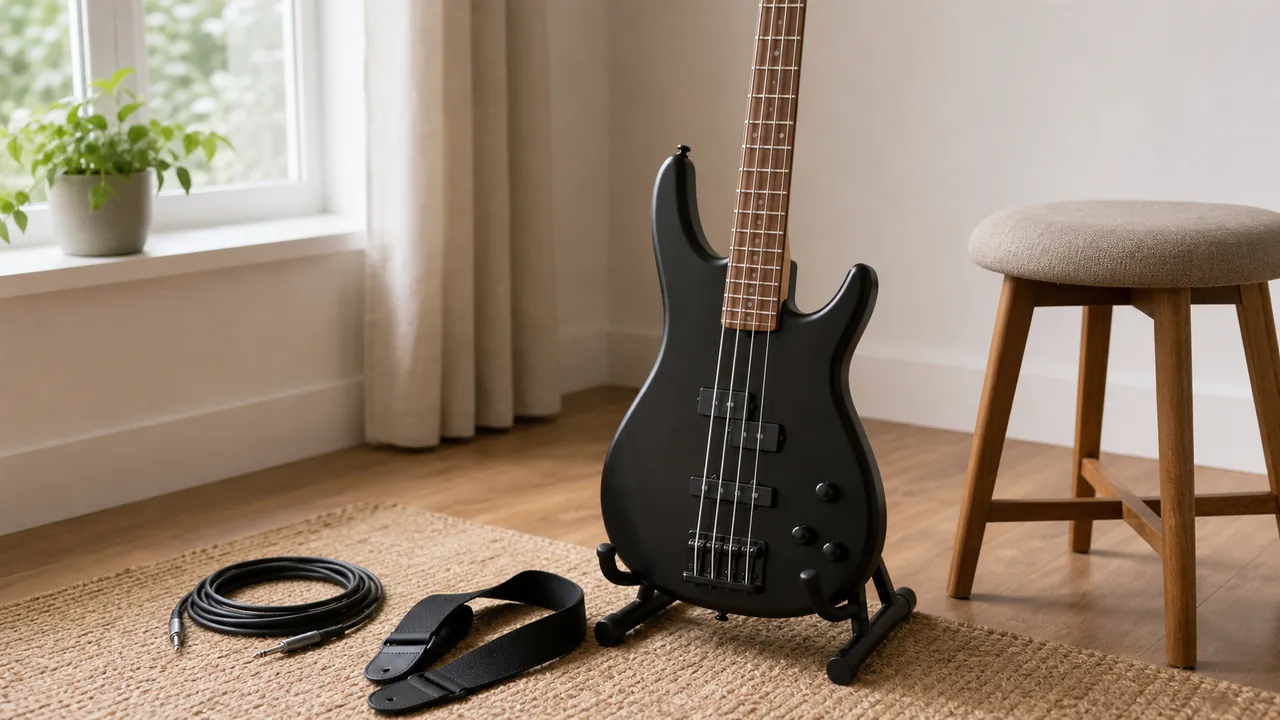
- First four-string with familiar controls: Yamaha TRBX174
- 28.6-inch scale and compact reach: Ibanez GSRM20 miKro
- Active single-pickup sound: Sterling StingRay RAY4
- Low-B range for repertoire that needs it: Squier Affinity Jazz Bass V
Avoid a five-string or active bass simply because it appears more capable. Both add decisions and the active bass needs a working battery.
Verify: seated balance, strap balance, setup, exact weight and a useful return window.
Compare the four basses Inspect product detailsRead the neck, strings and signal path before buying
Scale length
Meaning: the vibrating string length from nut to bridge.
Why it matters: it changes fret spacing and string feel.
Check: compare a first-to-fourth-fret exercise with a neutral wrist.
Do not assume: short scale is only for children or always easier.
Passive electronics
Meaning: pickups and controls that do not need an onboard battery.
Why it matters: there is no battery failure to diagnose.
Check: turn every control and listen for scratchiness or dropouts.
Do not assume: passive means weak or inferior.
Active preamp
Meaning: battery-powered onboard circuitry that can boost or cut frequencies.
Why it matters: it adds range and a battery-dependent failure point.
Check: locate the battery access and unplug the cable after practice.
Do not assume: active automatically means louder or better in a band mix.
P/J pickups
Meaning: one split pickup plus one single-coil bridge pickup.
Why it matters: separate volumes let the player blend two positions.
Check: test each pickup alone and together.
Do not assume: two pickups guarantee every bass sound.
Five-string bass
Meaning: usually a four-string bass with a lower B string added.
Why it matters: it expands low range but widens the neck and adds muting work.
Check: play across all strings without the unused low B ringing.
Do not assume: an extra string is free capability.
Nut width
Meaning: neck width where the strings begin.
Why it matters: it helps describe spacing but not neck depth or shoulder.
Check: compare the whole neck shape, not one number.
Do not assume: the narrowest nut suits every hand.
Bass practice rig
Meaning: bass, cable, bass-capable amplifier or interface, and listening method.
Why it matters: an ordinary guitar amp may not handle bass frequencies safely at useful volume.
Check: price the entire signal path and headphone option.
Do not assume: passive headphones plug directly into the bass.
Setup and action
Meaning: setup adjusts neck relief, string height, nut slots and intonation; action is the resulting string height over the frets.
Why it matters: poor adjustment can make a suitable bass needlessly hard to fret or unevenly buzzy.
Check: have a teacher or technician inspect the exact bass during the return window.
Do not assume: the lowest possible strings are automatically the best setup.
Why these basses survived the reach-and-rig test
Sweetwater and Thomann formed the US and European retailer map because both expose current exact-model stock and customer-response signals across a broad bass range. Manufacturer pages controlled construction and scale facts. A bass had to be orderable during this run, have a distinct buyer job, and have enough current evidence to explain a real drawback.
We excluded boutique, vintage, fretless and six-string instruments from this starting set. They can be right later, but they obscure the first decisions: reach, four versus five strings, passive versus active controls, setup and the cost of a suitable amp.
Long scale, short scale, active or low B?
Use the final column first. It identifies the extra skill or maintenance each choice asks of a new player.
| Model | Scale / strings | Electronics | Retail evidence | Buyer meaning |
|---|---|---|---|---|
| Yamaha TRBX174 | 34 in; four strings | Passive P/J | Sweetwater in stock with 11 reviews; Thomann exact family stocked | Conventional reach and controls; no battery. |
| Ibanez GSRM20 miKro | 28.6 in; four strings | Passive P/J | Sweetwater in stock with 38+ finish-specific reviews; Thomann stocked | Shortest reach here; compare low-string feel and intonation carefully. |
| Sterling StingRay RAY4 | 34 in; four strings | Active 2-band; one humbucker | Sweetwater exact finishes in stock with reviews; Thomann carries RAY4 family | Focused active lane with battery and fewer pickup positions. |
| Squier Affinity Jazz Bass V | 34 in; five strings | Passive twin single coils | Sweetwater in stock with 8 reviews; Thomann stocked exact family | Useful low B at the cost of a wider neck and more muting. |
Choose the bass that leaves room to learn
Yamaha TRBX174
A 34-inch scale, four strings and passive P/J controls make this the cleanest baseline for lessons and general practice. It gives the player two pickup positions to compare without adding a battery or fifth string.
The familiar four-string/passive layout leaves attention for timing and muting.
Full-scale reach can feel long, and separate pickup volumes take a little learning.
Avoid if: a neutral wrist breaks down during first-position stretches.
Closest alternative: Ibanez GSRM20 miKro for a much shorter scale.
What we could verify: current official construction, current US orderability, European family stock and written Yamaha US warranty. Exact weight and factory remain seller checks.
Ibanez GSRM20 miKro
The 28.6-inch scale materially reduces fret spacing rather than merely changing body shape. It suits a player who can keep a better wrist and shoulder position on a compact bass after a direct A/B fit test.
Compact scale and four-string P/J controls preserve a normal learning path.
Very short scale changes tension and low-string response; setup and string choice matter.
Avoid if: the player prefers firmer full-scale string feel or needs a standard 34-inch reference for school instruments.
Closest alternative: Yamaha TRBX174 for full-scale passive familiarity.
What we could verify: official scale and construction plus live US/EU listings and strong retailer review volume. Ask for exact weight, setup and country label.
Sterling StingRay RAY4
The ceramic humbucker and two-band active preamp form a coherent alternative to passive P/J and Jazz layouts. Choose it when that control scheme matches the music and the player will manage the battery.
Bass and treble controls make broad changes from the instrument.
A dead battery can silence or distort the signal, and one pickup position narrows the comparison.
Avoid if: battery-free simplicity or multiple pickup positions matter more.
Closest alternative: Yamaha TRBX174 for passive P/J blending.
What we could verify: current official layout, live Sweetwater stock and reviews, and dual-market model-family presence. Exact weight, factory and regional warranty need written confirmation.
Squier Affinity Jazz Bass V
The low B adds notes below standard four-string range and can reduce position shifts. It belongs here only for a player whose teacher, arrangements or band music actually uses that range.
Two Jazz-style pickups and a fifth string expand range without an onboard battery.
The 47.6 mm nut and extra string demand more left-hand span and right-hand muting.
Avoid if: the player cannot explain where the low B will be used.
Closest alternative: Yamaha TRBX174 for a narrower four-string learning surface.
What we could verify: current official geometry, US and European listings, retailer response and Fender's written Squier warranty. Verify exact weight and country marking.
A bass without a bass rig is an unfinished purchase
Budget for a bass-capable amp or interface, instrument cable, tuner, strap, secure stand or bag, spare strings and an inspection or setup. A guitar practice amp is not an automatic substitute: ask its maker whether bass use is supported, especially at room volume.
Weight printed online is often a sample, shipping value or absent altogether. Ask the retailer for the actual boxed instrument's weight when shoulder comfort matters, then test both seated and standing balance.
Run the eight-minute reach and muting rehearsal
Wear the strap seated. Put the first fret within reach without lifting the shoulder.
Alternate fingers on frets 1-2-3-4. Stop if the wrist bends sharply to complete the pattern.
Play one string while touching every unused string. Listen for sympathetic ringing.
Stand, repeat, then write which bass preserved posture rather than which finish looked better.
Learn what a failing active battery sounds like
For the RAY4, ask the shop to demonstrate battery access and the signal with a fresh battery. Record the battery type in the case, carry a spare, and unplug the instrument cable after use because the jack commonly switches the circuit on. If this routine is unwelcome, choose passive electronics now.
Take this script to the first amplified rehearsal
Neck measurements, factory labels and written cover
These facts describe ownership and fit, not sound quality. “Not verified” is a prompt to inspect the exact instrument.
| Product | Size / weight | Materials | Manufacturing origin | Brand | Warranty |
|---|---|---|---|---|---|
| Yamaha TRBX174 | 34 in scale; 40 mm nut. The checked official material does not state exact item weight. | Mahogany body; maple neck; sonokeling fingerboard; passive P/J pickups. | Not verified for this exact finish; inspect the instrument label. | Yamaha, Hamamatsu, Japan; founded 1887; broad musical-instrument maker. | US guitar policy lists limited lifetime structural and one-year listed hardware/electronics coverage; conditions apply. |
| Ibanez GSRM20 miKro | 28.6 in / 726 mm scale; 38 mm nut. Exact item weight not verified. | Poplar or finish-specific body listing; maple neck; jatoba fingerboard; passive P/J pickups. | Not verified for the exact selected finish; brand base is not proof. | Ibanez is a Hoshino Gakki brand based in Nagoya, Japan; name used for instruments since the 20th century. | Current market-specific written term was not verified; request manufacturer and retailer terms before paying. |
| Sterling StingRay RAY4 | 34 in scale; 38 mm nut. Exact item weight not verified. | Hard maple neck; finish-dependent hardwood body; ceramic humbucker; active two-band preamp. | Exact selected SKU origin not verified; inspect country label. | Sterling by Music Man, associated with Ernie Ball Music Man in California; known for accessible StingRay-derived instruments. | No current market-specific term verified in the checked material; obtain written coverage and battery/electronics scope. |
| Squier Affinity Jazz Bass V | 34 in scale; 47.6 mm nut. Exact item weight not verified. | Poplar body; maple neck; laurel fingerboard; two ceramic single coils. | Not verified for exact sunburst SKU; inspect label and serial record. | Squier, operated by Fender in Scottsdale, Arizona; instrument line launched in 1982. | Fender lists two years for Squier electric basses, subject to territory and purchaser terms. |
The return-window bass inspection
- Tune, stretch the strings, retune and check open notes against 12th-fret notes.
- Play every fret on every string at normal attack; record buzzes or dead notes.
- Test seated and standing balance with the strap you will use.
- Turn every control through its full travel and gently move the cable plug.
- Have a teacher or technician confirm relief, action, nut slots and saddle adjustment range.
Manufacturer and retailer records
Retail listings establish the dated stock and buyer-response snapshot; manufacturer pages control stable specifications where available.
- Yamaha TRBX series specifications
- Sweetwater Yamaha TRBX174 listing
- Thomann Yamaha TRBX174 listing
- Yamaha US guitar warranty
- Ibanez GSRM20 official specifications
- Sweetwater Ibanez GSRM20 listing
- Thomann Ibanez GSRM20 listing
- Sterling StingRay RAY4 specifications
- Sweetwater StingRay RAY4 listing
- Thomann StingRay RAY4 listing
- Fender/Squier Affinity Jazz Bass V specifications
- Sweetwater Affinity Jazz Bass V listing
- Thomann Affinity Jazz Bass V listing
- Fender and Squier warranty terms
Found something that needs correcting? Contact the Consordini editorial team.